

Buyers lose more money to unclear specifications than to high prices, because an unclear specification is paid for twice: once on the invoice and again on site. What follows explains what each figure on a specification actually governs once the material is installed. Glass fibre mesh carries the tensile strength, which is why the board behaves better than a brittle mineral sheet when it is handled or cut. Density varies across the range, and a denser board is stronger and more sound resistant while a lighter board is easier to handle overhead.
The core is formed from magnesium oxide and magnesium chloride or sulphate, reinforced with glass fibre mesh and filled with light mineral aggregate. Because the mix is inorganic, the board does not feed a fire and does not release the smoke associated with organic binders.
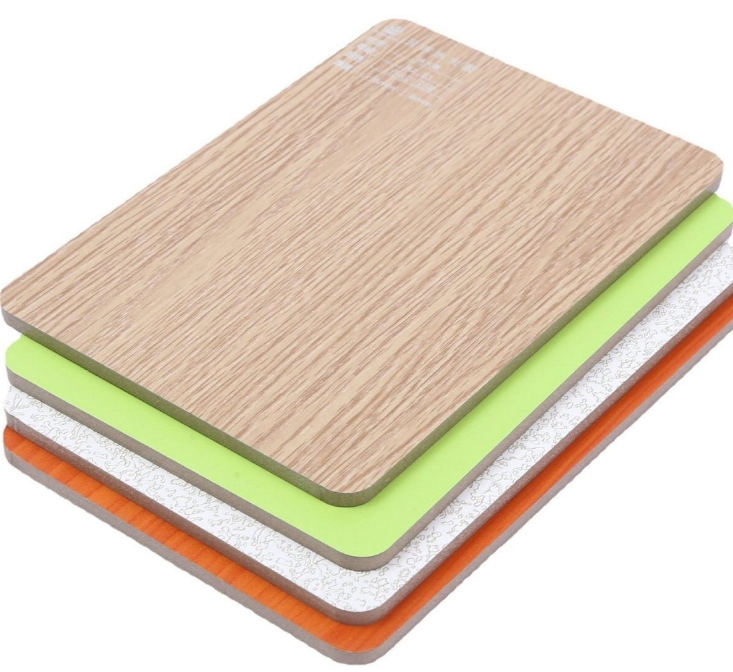
Schools, hospitals, transport terminals and shopping centres specify this material because the regulatory requirement is explicit rather than discretionary. Because the board is inorganic it also tolerates the humidity found in some service spaces better than a paper-faced gypsum product.
- Confirm the application, the substrate and the traffic the surface will face
- Agree the material build and the measurable tolerances, in writing
- Approve the physical colour sample under the lighting of the final space
- Run a pilot batch and hold a reference panel from it
The cost difference is real, and the honest advice is to use gypsum where the regulations permit and the mineral board where they do not. That distinction matters more than it first appears. Gypsum board is lighter, cheaper and easier to finish, and for ordinary interior partitions it remains the sensible choice.
Cut edges and fixing penetrations should be sealed in wet areas, since they are the routes by which moisture enters the assembly. Buyers who understand this stage tend to negotiate differently at every stage after it. In bathrooms and kitchens, a tiled or panelled finish over the board protects it while retaining the fire performance of the substrate.
Joints between boards are reinforced with mesh tape and joint compound, or covered with a trim where a movement joint is required. It is a small detail with a disproportionate effect on how the finished job looks. Because the board is dense, panels are usually handled in pairs rather than singly, and lifting equipment is avoided by using shorter boards overhead.
Projects with a similar brief usually specify a WPC Wall Panel Manufacturer at the same stage, and for the same reasons. The documentation pack normally contains the classification report, the material safety data sheet and the manufacturer’s declaration of performance. None of these points is difficult on its own; the difficulty is in doing all of them every time. For export, the declaration should name the standard applied in the destination country, not only the standard used at the factory.
In practice, magnesium oxide board suppliers are chosen on measurable properties rather than on catalogue photographs, and the difference only becomes visible over years. The certificate issued for a product names the standard, the thickness and the assembly tested, and all three must match the specification. The order in which these are decided matters as much as the values themselves. Buyers should ask for the classification report rather than a marketing statement, because only the report states what was actually measured.
We keep the mix ratio fixed between runs, because changing it changes the board in ways that only appear after months of exposure. Two otherwise identical specifications can diverge completely at this point. The ratio of the two magnesium salts affects strength, moisture behaviour and stability, and it is one of the least visible differences between suppliers.
Both figures appear in the test report, and a supplier who quotes only flame spread is presenting half the picture. Toxicity assessment looks at the gases produced under fire conditions, and for a mineral board the results are inherently favourable.
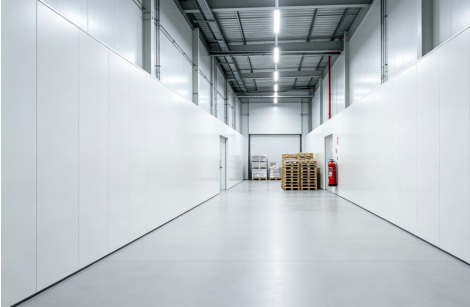
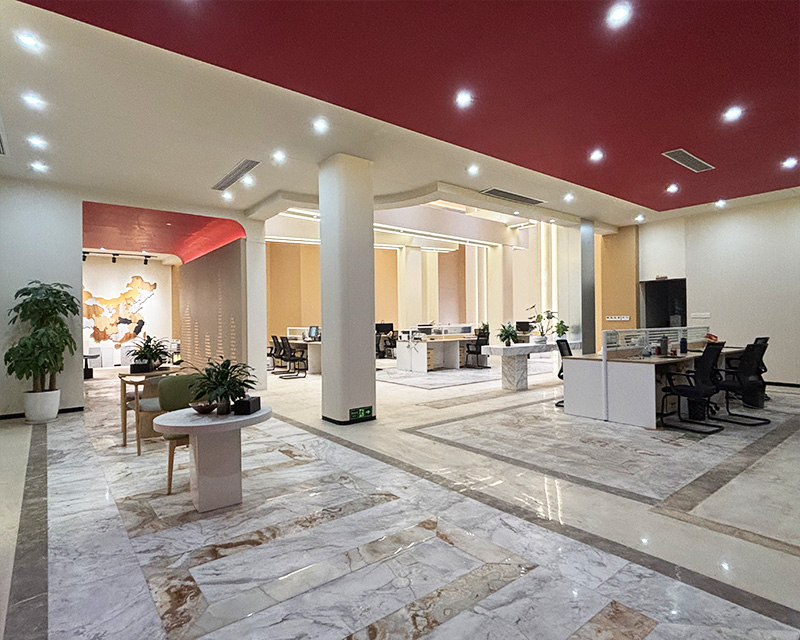
The market for magnesium oxide board suppliers has shifted towards lighter, faster-to-install systems that reduce wet trades on site. Shafts, escape stairs and service risers are the most common locations, where the board provides both a fire barrier and a finished surface. Acoustic requirements often arrive with the fire requirement, and a cavity with mineral wool satisfies both without extra thickness.
Where magnesium oxide board suppliers are used across several floors or phases, batch consistency matters more than any single performance figure. Our sample room stays open for visitors, and the fastest way to settle a specification argument is still to put two boards side by side under the same light.