

Finding a restaurant that serves delicious burgers is easy, but confirming that its food meets halal requirements may require a little more research. In a diverse city like Chicago, restaurants offer a wide range of cuisines, cooking styles, and dietary options. Customers who follow Islamic dietary guidelines often want to know where the meat comes from, how it is prepared, and whether the ingredients meet halal standards.
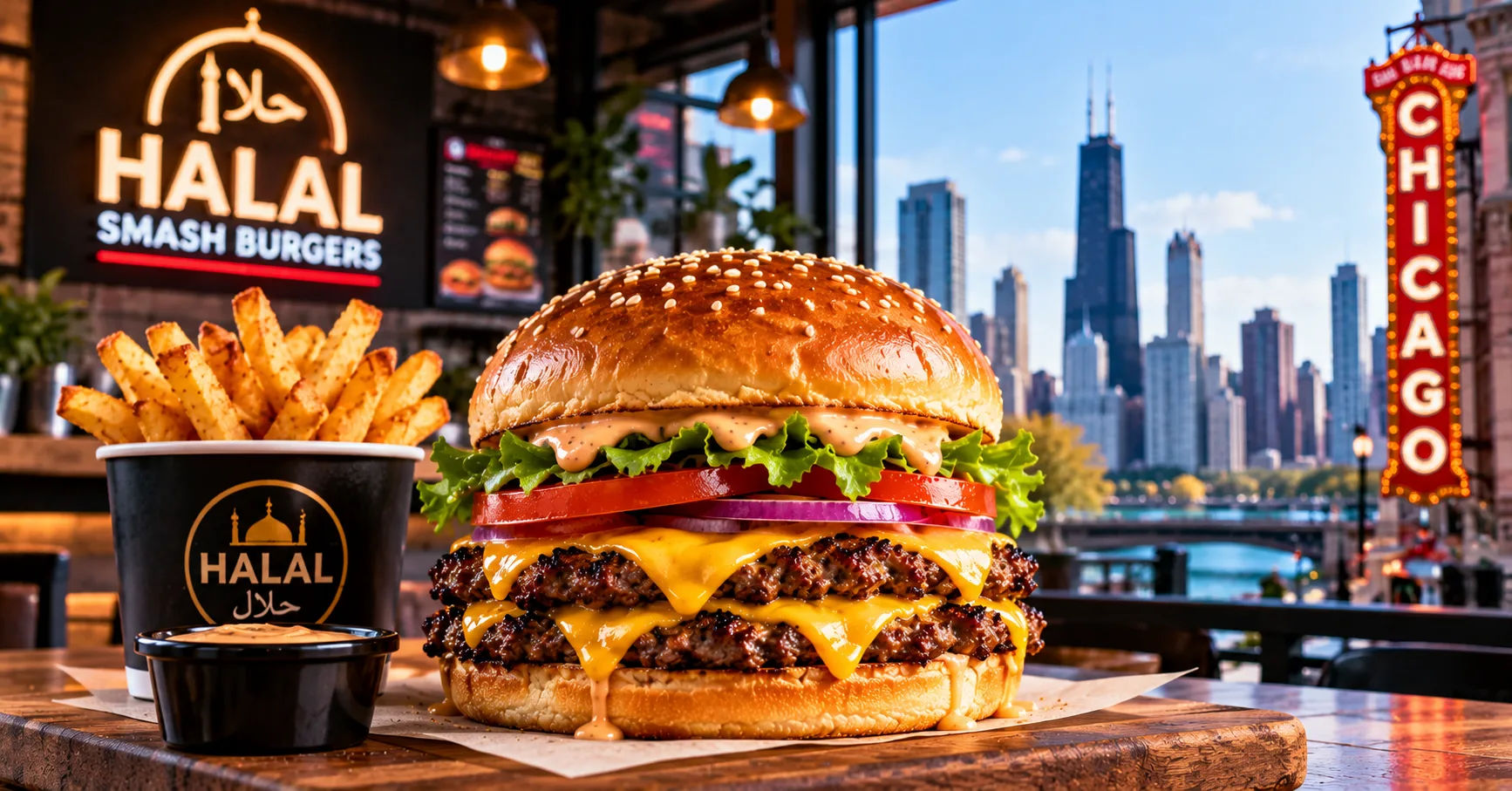
A Halal Burger Restaurant in Chicago can be evaluated by looking at its halal certification, meat suppliers, ingredient information, food preparation practices, and transparency with customers. These details help diners make informed decisions instead of relying only on a menu description or a sign displayed near the entrance.
Verification matters because halal food requirements apply to more than the type of meat used. The source of the meat, slaughter procedures, seasonings, sauces, cheese, and prevention of cross-contact can all be relevant. Different certification organizations may also use different standards and inspection procedures.
This comprehensive guide explains how to verify a burger restaurant's halal status in Chicago, which questions to ask, how to evaluate certificates, and what to do when information is incomplete. Whether you are a local resident, a student, a visitor, or someone exploring Chicago's burger scene, these practical steps can help you choose a restaurant with greater confidence.
What Does Halal Verification Mean?
Halal is an Arabic word meaning permissible. In food, it generally refers to products and preparation practices that comply with Islamic dietary requirements.
Verification is the process of checking whether a restaurant's claims are supported by reliable evidence. This may involve reviewing certification, confirming the source of its meat, examining ingredient information, and understanding how food is stored and cooked.
A Halal Burger Restaurant in Chicago advertise halal burgers, but that statement alone does not explain whether its entire menu is halal, whether every ingredient has been checked, or whether its kitchen follows suitable separation procedures.
Verification helps answer those questions.
Why Halal Verification Is Important
For Muslim customers, halal status is an important part of choosing food. They may want assurance that beef comes from a permissible source, that applicable slaughter requirements have been followed, and that prohibited ingredients have not been introduced during preparation.
Verification also encourages restaurants to maintain consistent procedures. Staff members who understand ingredient sourcing, storage, and cleaning requirements are better equipped to answer customer questions accurately.
It is important to distinguish between a restaurant that has been independently certified and one that relies on its own declaration. Both may serve halal food, but the available evidence is different.
Does Every Halal Restaurant Need Certification?
Not every restaurant operates under the same certification arrangements. Some obtain certification from a third-party organization, while others rely on suppliers' documentation and internal procedures.
Certification can provide useful independent assurance, but its meaning depends on the certifier, the scope of the certificate, and whether it remains valid.
A restaurant without a displayed certificate should not automatically be assumed to serve non-halal food. Instead, customers can ask for details about its sourcing and verification practices and decide whether the available evidence meets their needs.
Step 1: Check the Restaurant's Halal Certification
One of the most reliable starting points is to determine whether the restaurant is certified by a recognized halal certification organization.
Certification generally involves reviewing relevant ingredients, suppliers, and food-handling practices. The exact process depends on the certifier and the scope of its program.
Look for a Recognized Certifier
In Chicago, diners can check organizations that publish halal-certified restaurant directories. One example is Halal Monitoring Services (HMS). Its official directory lets customers search for restaurants and review their certification status.
You can start with the official
When reviewing a listing, check:
-
The restaurant's exact name.
-
The street address and location.
-
The current certification status.
-
The products or meat categories covered.
-
The certificate's validity or expiration date, when provided.
Do not assume that a certificate for one branch automatically applies to every branch operated by the same business.
Verify the Certificate Directly
If a restaurant displays a certificate, examine it carefully. Look for the certifying organization's name, the covered establishment or products, the issue and expiration dates, and any certificate number.
Where possible, confirm the details through the certifier's official website or contact information. A certificate image shared on social media may be outdated, incomplete, or difficult to authenticate.
Some certifiers provide online verification tools or searchable directories. For example, the USA Halal Chamber of Commerce explains how customers can check certificate details and identify potentially invalid certificates.
A genuine, current certificate that covers the specific restaurant provides stronger evidence than an unverified logo on a menu.
Step 2: Understand Illinois Halal Disclosure Requirements
Chicago restaurants operate under Illinois law, which includes requirements relating to the representation and sale of halal food.
The Illinois Department of Agriculture explains that establishments advertising, offering, selling, preparing, or handling food represented as halal must register under the state's halal registration process. Its guidance describes documentation from a specialized Islamic certifying entity or a supervising Muslim halal food inspector as part of the registration requirements.
This makes the state registration process another useful part of verification.
Check the Restaurant's Disclosure Information
Illinois regulations include disclosure requirements concerning halal food and whether an establishment operates under the supervision of a halal certifying entity. The prescribed restaurant disclosure can also address matters such as whether the business sells only food represented as halal or sells both halal and non-halal food.
When visiting a restaurant, look for its posted halal disclosure or registration information. If you cannot find it, ask a manager where it is displayed or how the restaurant documents its halal status.
Do not rely on a generic statement such as "all our meat is halal" if you need to establish the basis for that claim.
Know What State Registration Does and Does Not Prove
State registration and third-party certification are related but distinct forms of evidence.
Registration can help establish that a business has submitted the required information under the applicable state process. A certifier's records may provide further details about the products and procedures it oversees.
Neither should be interpreted more broadly than its actual scope. For example, documentation covering beef does not necessarily establish that every sauce, cheese, dessert, or item on a mixed menu has been separately certified.
For the most reliable assessment, compare the restaurant's disclosure information with the certifier's records and the actual menu.
Step 3: Ask Where the Meat Comes From
The quality of halal verification depends heavily on the meat supply chain. A restaurant should be able to explain where it obtains its beef and how it confirms the meat's halal status.
Ask About the Beef Supplier
A useful question is, "Which supplier provides your halal beef, and how do you verify its halal status?"
A restaurant may be able to identify its supplier, explain its purchasing procedures, or provide information about certification and delivery documentation.
You do not necessarily need access to confidential business records. The goal is to understand whether the restaurant has a credible process for checking its meat.
Confirm the Scope of the Claim
A burger restaurant might use halal beef but also sell chicken, turkey, or other products obtained from different suppliers.
If you intend to order a beef burger, ask about the beef specifically. If you plan to order chicken or another item, verify that product separately.
This is particularly important for menus that combine burgers with fried chicken, hot dogs, or other foods.
Look for Consistent Information
A restaurant's statements should be consistent across its menu, staff responses, posted disclosures, and certification records.
If a manager says that all beef is halal but the available documentation covers only a different product category, ask for clarification before deciding.
Consistency is a useful sign of a well-managed verification process, although it is not a substitute for independent evidence.
Step 4: Check the Ingredients in the Burger
Even when the beef is halal, the other ingredients deserve attention. A burger can contain cheese, sauces, seasonings, and processed toppings whose ingredients vary by manufacturer.
Review the Cheese
Cheese can contain rennet or enzymes used during production. Their sources and processing methods may matter under the halal standards you follow.
Ask whether the restaurant uses halal-certified cheese or has reliable information about its ingredients. If cheese is important to your decision, do not assume that every brand is identical.
Examine Sauces and Condiments
Ketchup, mustard, mayonnaise, barbecue sauce, and special burger sauces are common additions. Most have familiar ingredients, but some commercial products contain flavorings or other components that may require further investigation.
Ask whether the restaurant checks the ingredient labels of its sauces and whether any ingredients conflict with your halal requirements.
A homemade sauce is not automatically halal simply because it is prepared in the restaurant. Its ingredients still matter.
Consider Seasonings and Cooking Ingredients
Seasoning blends may contain several additives, while cooking fats and oils can vary. If the restaurant uses marinades, flavored oils, or prepared seasoning mixes, it should be able to explain how it checks them.
For customers who prefer a cautious approach, choosing a simple burger with verified beef, suitable cheese, fresh vegetables, and clearly identified condiments may make ingredient checks easier.
Step 5: Find Out How the Kitchen Prevents Cross-Contact
Cross-contact occurs when food comes into contact with another food, ingredient, or surface. For customers who require halal preparation, contact with prohibited ingredients can be a concern.
Ask About Shared Grills and Fryers
Some restaurants prepare halal and non-halal products in the same kitchen. In that situation, the way equipment is managed becomes particularly important.
Ask whether the burger patties are cooked on a dedicated surface or whether the restaurant has suitable cleaning and separation procedures.
You can also ask whether the same fryer is used for products containing prohibited ingredients and whether separate utensils are used.
The appropriate arrangements may depend on the restaurant's practices and the halal standard it follows. If you require dedicated equipment, explain that preference clearly rather than assuming it is provided.
Check Storage and Food Preparation
Raw meat should be stored appropriately, and halal ingredients should be handled in a way that prevents contact with prohibited foods.
Clean utensils, clearly organized storage, and staff training can help support consistent procedures.
A brief look at an open kitchen may offer some clues, but appearance alone cannot prove compliance. Ask staff or management about their procedures when you need a clearer answer.
Ask Whether Staff Understand the Policy
Employees should be able to direct halal questions to someone who knows the restaurant's procedures.
A cashier may not know the details of meat sourcing or certification, so asking for a manager is reasonable. A thoughtful explanation is more useful than an unsupported assurance.
Step 6: Use Reliable Online Sources Before Visiting
Online research can help you narrow down restaurants before spending time or money on a visit.
Start with official certification directories rather than relying only on food delivery apps, customer reviews, or social media posts.
Treat Reviews as Supporting Information
Google reviews, restaurant websites, and local community discussions can provide useful leads. Customers may mention whether staff answered halal questions or whether a certificate was displayed.
However, reviews are not official certification records. They may refer to an earlier visit, a different branch, or a restaurant's previous supplier.
Use them to identify questions worth asking, then verify important claims through official sources or directly with the restaurant.
Common Warning Signs to Watch For
Several issues should prompt further investigation before you decide where to eat.
-
An expired certificate: Ask the certifying organization whether the restaurant's status has been renewed.
-
A certificate for another branch: Confirm that the exact address you plan to visit is covered.
-
An unclear certification scope: Check which products or operations the document covers.
-
Conflicting answers: If staff members provide different explanations about meat sourcing, ask a manager for clarification.
-
Unclear mixed-kitchen procedures: Ask how the restaurant separates halal food from prohibited ingredients.
-
Unsupported online claims: Treat a logo or social media statement as a starting point, not proof.
A warning sign does not automatically establish that a restaurant serves non-halal food. It means that the available information is insufficient and deserves further checking.
Questions to Ask Before Ordering
If you are uncertain about a restaurant, a few direct questions can help you assess its practices without making the conversation complicated.
Restaurant verification checklist
Use this checklist when contacting a restaurant or speaking with its manager.
0 of 6 questions checked
Reset checklist
You do not have to ask every question at every restaurant. Prioritize the details that matter most to you, particularly certification, meat sourcing, and preparation practices.
Conclusion
Verifying a Halal Burger Restaurant in Chicago involves more than looking for the word "halal" on a menu. The most reliable approach combines several checks, including current certification records, Illinois registration and disclosure information, meat sourcing, ingredient verification, and kitchen procedures.
Start by searching an official halal certification directory and confirming that the listing matches the exact restaurant location. If a certificate is displayed, check its validity, scope, and issuing organization. Illinois Department of Agriculture guidance can also help you understand the state's halal registration requirements.
Next, ask where the beef comes from and whether the restaurant can explain how it verifies its suppliers. Remember that halal meat alone does not automatically establish the status of cheese, sauces, seasonings, and every other menu item. If shared cooking equipment is a concern, ask how the restaurant handles cleaning and separation.
Online reviews and restaurant websites can help you discover options, but they should support rather than replace reliable verification. If information is unclear or contradictory, request clarification before ordering.
Ultimately, choosing a Halal Burger Restaurant in Chicago becomes easier when you know what evidence to look for and which questions to ask. Independent certification, transparent documentation, and consistent answers can help you make a more informed decision. By taking these practical steps, you can explore Chicago's burger scene with greater confidence while respecting your dietary requirements.