

A Packing Machine is one of the most important pieces of equipment in modern manufacturing and food industries. A Packing Machine helps automate the process of filling, sealing, labeling, and preparing products for distribution.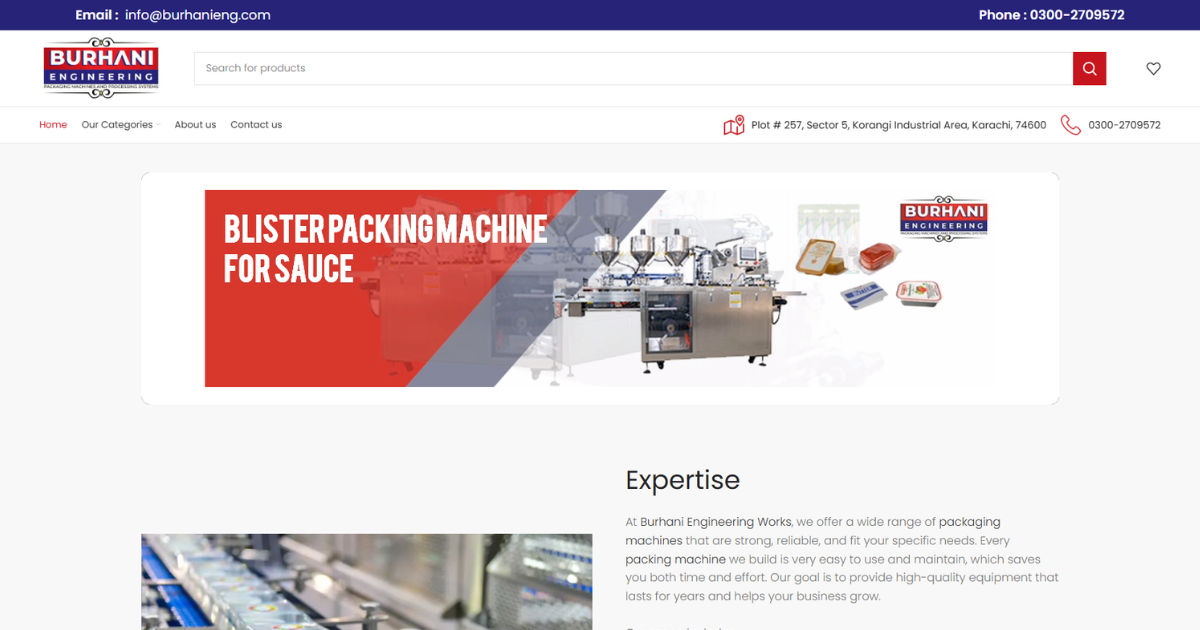
A Packing Machine increases speed, reduces human error, and improves product safety. In today’s advanced industries, a Packing Machine depends heavily on sensors to perform accurate and reliable operations.
These sensors allow a Packing Machine to “see,” “measure,” and “decide” during the packaging process. Without sensors, a Packing Machine would not be able to maintain precision, consistency, or efficiency.
This article explains in detail what sensors are used in a Packing Machine, how they work, and why they are important. The guide is written in simple language so that even a 12th-grade student can easily understand the concept of a Packing Machine and its sensor systems.
The Role of Sensors in a Packing Machine
A Packing Machine relies on sensors to automate its functions. Sensors are devices that detect changes in the environment and send signals to the system. In a Packing Machine, sensors help detect position, weight, temperature, speed, and product presence.
A modern Packing Machine uses sensors to reduce manual work and ensure high accuracy. For example, if a bottle is not properly placed, a sensor in the Packing Machine will detect it and stop the process. This prevents waste and ensures quality control.
Sensors are the “eyes and ears” of a Packing Machine. They allow machines to make real-time decisions. Without sensors, a Packing Machine would be slow, inefficient, and prone to errors.
Types of Sensors Used in a Packing Machine
A Packing Machine uses different types of sensors depending on its design and purpose. Each sensor plays a specific role in making the Packing Machine efficient and reliable.
Below are the main sensors used in a Packing Machine.
Photoelectric Sensors in a Packing Machine
Photoelectric sensors are one of the most common sensors in a Packing Machine. These sensors use a light beam to detect the presence or absence of objects.
In a Packing Machine, photoelectric sensors help detect products moving on a conveyor belt. When an object interrupts the light beam, the sensor sends a signal to the Packing Machine control system.
This helps the Packing Machine:
- Detect bottle or packet position
- Count products
- Control timing of packaging operations
Photoelectric sensors improve the speed and accuracy of a Packing Machine significantly.
Proximity Sensors in a Packing Machine
Proximity sensors detect objects without physical contact. A Packing Machine uses inductive and capacitive proximity sensors.
Inductive sensors detect metal objects, while capacitive sensors detect both metal and non-metal objects like plastic or liquid containers.
In a Packing Machine, proximity sensors are used for:
- Detecting machine parts position
- Checking container presence
- Ensuring safety during operation
A Packing Machine becomes more reliable with proximity sensors because they reduce mechanical wear and tear.
Ultrasonic Sensors in a Packing Machine
Ultrasonic sensors use sound waves to measure distance. A Packing Machine uses these sensors to detect liquid levels or object height.
For example, in a liquid Packing Machine, ultrasonic sensors check how much liquid is filled in bottles.
Functions of ultrasonic sensors in a Packing Machine:
- Measure fill level
- Detect transparent objects
- Ensure correct packaging quantity
These sensors make the Packing Machine suitable for industries like beverages and chemicals.
Load Cell Sensors in a Packing Machine
Load cell sensors measure weight. A Packing Machine uses load cells to ensure accurate filling and packaging.
In industries like food and pharmaceuticals, weight accuracy is very important. A Packing Machine with load cell sensors ensures each package has the correct weight.
Functions include:
- Weight measurement of products
- Quality control
- Preventing overfilling or underfilling
Load cells increase the reliability of a Packing Machine significantly.
Temperature Sensors in a Packing Machine
Temperature sensors are used in a Packing Machine to monitor heat levels during sealing or filling processes.
For example, in a heat-sealing Packing Machine, temperature must be controlled precisely.
Temperature sensors help a Packing Machine:
- Maintain sealing quality
- Prevent overheating
- Protect products from damage
A Packing Machine without temperature sensors may produce weak seals or damaged products.
Pressure Sensors in a Packing Machine
Pressure sensors detect force or pressure levels in a system. A Packing Machine uses pressure sensors in pneumatic systems.
These sensors help the Packing Machine:
- Control air pressure in sealing machines
- Maintain consistent packaging force
- Improve safety in operation
A Packing Machine with pressure sensors ensures stable and smooth functioning.
Encoder Sensors in a Packing Machine
Encoder sensors measure speed, position, and direction of moving parts. A Packing Machine uses encoders to control conveyor belts and motors.
In a Packing Machine, encoder sensors:
- Track conveyor belt speed
- Ensure correct timing of operations
- Improve synchronization of machine parts
This makes the Packing Machine more precise and efficient.
Level Sensors in a Packing Machine
Level sensors detect the amount of liquid or material in containers. A Packing Machine uses these sensors in filling systems.
Functions in a Packing Machine include:
- Detecting liquid levels in tanks
- Controlling filling operations
- Preventing overflow
Level sensors ensure that a Packing Machine delivers accurate filling every time.
Vision Sensors in a Packing Machine
Vision sensors are advanced sensors that act like cameras. A Packing Machine uses vision systems to inspect products visually.
In a Packing Machine, vision sensors:
- Detect product defects
- Check label placement
- Verify packaging quality
These sensors make a Packing Machine highly intelligent and suitable for modern automation.
Color Sensors in a Packing Machine
Color sensors detect color differences. A Packing Machine uses them to identify products or packaging materials.
Functions include:
- Sorting products
- Checking label correctness
- Ensuring packaging consistency
A Packing Machine becomes more flexible with color detection capability.
Limit Switch Sensors in a Packing Machine
Limit switches are mechanical sensors that detect movement limits. A Packing Machine uses them for safety and position control.
In a Packing Machine, limit switches:
- Stop machine movement at boundaries
- Prevent mechanical damage
- Ensure proper alignment
These sensors are essential for safe operation of a Packing Machine.
Hall Effect Sensors in a Packing Machine
Hall effect sensors detect magnetic fields. A Packing Machine uses them for motor control and position detection.
Functions include:
- Monitoring motor rotation
- Detecting moving parts
- Improving control accuracy
A Packing Machine uses hall effect sensors for smooth and controlled operations.
Why Sensors Are Important in a Packing Machine
Sensors are essential for every Packing Machine because they improve performance, safety, and accuracy.
A Packing Machine depends on sensors for:
- Automation of processes
- Error reduction
- Quality control
- Speed improvement
- Safety enhancement
Without sensors, a Packing Machine would not function efficiently in modern industries.
How Sensors Work Together in a Packing Machine
A Packing Machine does not rely on just one sensor. Multiple sensors work together to ensure smooth operation.
For example:
- A photoelectric sensor detects product presence
- A load cell measures weight
- A temperature sensor controls sealing heat
- A vision sensor checks quality
All these systems combine to make a Packing Machine intelligent and reliable.
Applications of Sensor-Based Packing Machine
A Packing Machine with advanced sensors is used in many industries:
- Food industry
- Pharmaceutical industry
- Beverage industry
- Chemical industry
- Electronics packaging
In every industry, a Packing Machine ensures speed, safety, and accuracy.
Advantages of Using Sensors in a Packing Machine
A Packing Machine with sensors offers many advantages:
- High precision
- Faster production
- Reduced waste
- Better product quality
- Less human intervention
These benefits make a Packing Machine essential for modern manufacturing.
Challenges in Sensor-Based Packing Machine Systems
Even though a Packing Machine with sensors is highly efficient, it has some challenges:
- High initial cost
- Maintenance requirements
- Sensor calibration needs
- Sensitivity to dust or moisture
However, the benefits of a Packing Machine still outweigh these challenges.
Future of Sensors in Packing Machine Technology
The future of a Packing Machine is strongly connected with smart sensors and AI technology.
Future developments include:
- AI-based vision systems
- Wireless sensor networks
- Self-calibrating sensors
- Smart predictive maintenance
A Packing Machine in the future will be even more intelligent and automated.
Conclusion
A Packing Machine is a vital part of modern industry, and its performance depends heavily on different types of sensors. From photoelectric and proximity sensors to advanced vision and load cell sensors, each plays a unique role in making a Packing Machine efficient, accurate, and safe.
As industries continue to grow, the importance of sensor-based automation in a Packing Machine will increase even more. These sensors help improve speed, reduce errors, and ensure high-quality packaging in every sector.
In simple terms, a Packing Machine is not just a mechanical device anymore—it is a smart system powered by advanced sensors working together. Understanding these sensors helps us appreciate how modern automation improves everyday industrial production.