

A pond with waterfall Long Island is one of the most beautiful backyard water features homeowners can build, but one of the most common questions is about the correct depth.
A pond with waterfall Long Island must be designed carefully because local weather, seasonal freezing, fish health, and waterfall flow all depend on depth.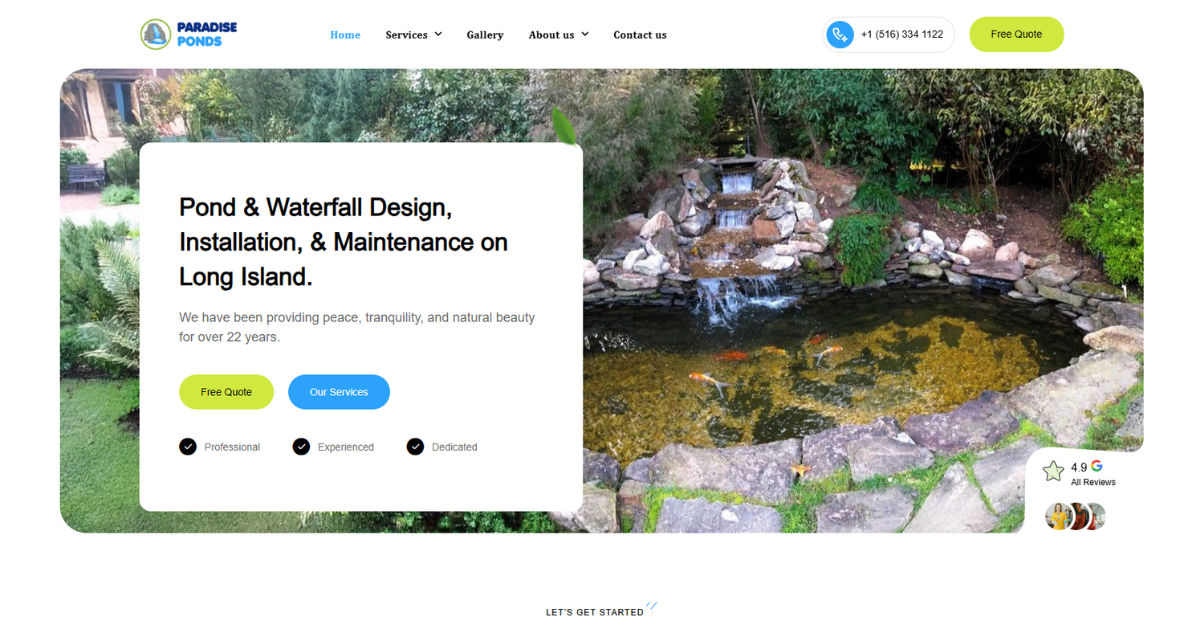
If a pond with waterfall Long Island is too shallow, it can freeze completely in winter. If it is too deep without planning, it becomes difficult to maintain and balance.
In this guide, you will learn exactly what depth works best for a pond with waterfall Long Island, how different depth zones function, and how to design a pond that stays healthy year-round.
A pond with waterfall Long Island is not just about looks—it is about balance, water circulation, and long-term stability.
The Ideal Depth for a Pond with Waterfall Long Island
The ideal depth for a pond with waterfall Long Island usually depends on climate and purpose. In Long Island’s seasonal environment, ponds must handle freezing winters and warm summers. A pond with waterfall Long Island should generally be at least 2 feet deep in shallow areas and 3 to 5 feet deep in the main basin.
A deeper pond with waterfall Long Island helps protect fish like koi and goldfish during winter. It also prevents the entire pond from freezing solid. A properly designed pond with waterfall Long Island balances depth with oxygen flow from the waterfall system.
Most experts recommend that a pond with waterfall Long Island should never be less than 24 inches deep at any point if fish are included.
Why Depth Matters for a Pond with Waterfall Long Island
Depth plays a critical role in the success of a pond with waterfall Long Island. It affects water temperature stability, oxygen levels, algae growth, and fish survival.
A shallow pond with waterfall Long Island heats up quickly in summer and freezes quickly in winter. This causes stress for aquatic life. A deeper pond with waterfall Long Island remains more stable throughout seasonal changes.
Waterfalls also depend on depth. A properly designed pond with waterfall Long Island uses gravity flow, and deeper water helps maintain strong circulation and clean oxygen levels.
Without proper depth, a pond with waterfall Long Island can become cloudy, smelly, or unbalanced.
Recommended Depth Zones in a Pond with Waterfall Long Island
A well-designed pond with waterfall Long Island is not one uniform depth. Instead, it includes multiple zones:
Shallow Zone (12–18 inches)
A shallow area in a pond with waterfall Long Island is used for plants like water lilies and marginal vegetation. This zone also provides a safe space for frogs and beneficial insects.
A pond with waterfall Long Island with shallow shelves creates natural beauty and improves biological balance.
Mid Depth Zone (18–30 inches)
This zone in a pond with waterfall Long Island is important for plant roots and fish movement. It offers transition space between shallow edges and deep water.
A balanced pond with waterfall Long Island uses this zone to support oxygen circulation from the waterfall.
Deep Zone (36–60 inches)
The deep zone is the heart of a pond with waterfall Long Island. It provides protection for fish during winter and keeps water cooler in summer.
A properly built pond with waterfall Long Island should have at least one deep pocket of 3 to 5 feet.
Winter Considerations for Pond with Waterfall Long Island
Long Island winters are cold, so a pond with waterfall Long Island must be designed to prevent complete freezing. Depth is the key factor.
A deep pond with waterfall Long Island allows fish to survive below the ice layer. Even when the surface freezes, deeper water stays liquid and stable.
A pond with waterfall Long Island should also include a pond heater or aerator to maintain oxygen exchange during winter months.
Without enough depth, a pond with waterfall Long Island risks losing fish and damaging ecosystem balance.
Waterfall Design and Depth Connection
The waterfall is a defining feature of a pond with waterfall Long Island. It improves oxygenation, circulation, and visual appeal.
However, waterfall performance depends on pond depth. A shallow pond with waterfall Long Island may not circulate water properly, leading to stagnation.
A deeper pond with waterfall Long Island allows the waterfall to push oxygen-rich water throughout the system.
The return flow from the waterfall helps maintain clarity in a pond with waterfall Long Island, but only if depth supports proper movement.
Fish Health and Depth in Pond with Waterfall Long Island
Fish health is directly connected to depth in a pond with waterfall Long Island. Koi and goldfish require stable environments.
A deeper pond with waterfall Long Island reduces stress, prevents overheating, and protects fish from predators.
In a shallow pond with waterfall Long Island, fish are more exposed and water quality changes quickly.
For koi lovers, a pond with waterfall Long Island should ideally be closer to 4–5 feet deep for long-term fish health.
Plant Growth and Depth Requirements
Aquatic plants are essential for a balanced pond with waterfall Long Island. They help filter water and provide oxygen.
Different plants require different depths. A pond with waterfall Long Island should include:
- Marginal plants in shallow zones
- Floating plants in mid zones
- Oxygenating plants in deeper zones
A well-balanced pond with waterfall Long Island uses depth variation to support plant diversity.
Without proper depth zones, a pond with waterfall Long Island cannot maintain natural filtration.
Soil, Excavation, and Site Planning
Before building a pond with waterfall Long Island, soil type and excavation depth must be evaluated.
Clay soil holds water better for a pond with waterfall Long Island, while sandy soil may require liner reinforcement.
Excavation for a pond with waterfall Long Island must consider slope, runoff, and waterfall elevation.
A poorly planned pond with waterfall Long Island can suffer from leaks or uneven water distribution.
Filtration and Depth Balance
Filtration is essential for a healthy pond with waterfall Long Island. Depth helps reduce the load on filtration systems.
A deeper pond with waterfall Long Island naturally stabilizes waste settlement and reduces algae growth.
When combined with a waterfall, a pond with waterfall Long Island benefits from continuous water movement that improves filtration efficiency.
Without proper depth, filtration in a pond with waterfall Long Island becomes overloaded.
Common Mistakes in Pond with Waterfall Long Island Design
Many homeowners make mistakes when building a pond with waterfall Long Island:
- Making the pond too shallow
- Ignoring winter freezing depth
- Poor waterfall placement
- No depth zoning
- Overcrowding fish
Each mistake can reduce the lifespan of a pond with waterfall Long Island.
The most critical issue is shallow depth in a pond with waterfall Long Island, which leads to unstable water conditions.
Maintenance Tips for Pond with Waterfall Long Island
A pond with waterfall Long Island requires regular maintenance to stay healthy.
Key maintenance tasks include:
- Removing debris
- Checking water depth levels
- Cleaning waterfall flow paths
- Monitoring fish health
- Testing water quality
A well-maintained pond with waterfall Long Island stays clear and balanced throughout the year.
Depth also affects maintenance effort. A properly designed pond with waterfall Long Island is easier to maintain than a shallow one.
Seasonal Behavior of Pond with Waterfall Long Island
A pond with waterfall Long Island changes with each season.
In summer, a deeper pond with waterfall Long Island stays cooler and reduces algae blooms.
In fall, leaves can accumulate, so depth helps prevent clogging in a pond with waterfall Long Island.
In winter, a deep pond with waterfall Long Island protects fish under ice layers.
In spring, a pond with waterfall Long Island naturally resets its ecosystem with rising temperatures and waterfall circulation.
Design Ideas for Pond with Waterfall Long Island
Aesthetic design is just as important as depth in a pond with waterfall Long Island.
Popular designs include:
- Natural rock waterfalls
- Tiered cascading waterfalls
- Modern minimalist ponds
- Japanese-style garden ponds
Each design works best when the pond with waterfall Long Island has proper depth zoning.
A visually appealing pond with waterfall Long Island always combines structure with functional depth planning.
Environmental Benefits of Pond with Waterfall Long Island
A well-designed pond with waterfall Long Island improves local biodiversity.
It attracts birds, frogs, and beneficial insects. A deep pond with waterfall Long Island also supports cleaner water ecosystems.
Water circulation in a pond with waterfall Long Island helps reduce mosquito breeding and stagnant water problems.
Depth ensures that a pond with waterfall Long Island remains environmentally balanced.
Long-Term Durability of Pond with Waterfall Long Island
Durability depends heavily on construction and depth. A properly built pond with waterfall Long Island can last decades.
A deeper pond with waterfall Long Island resists temperature stress and structural wear.
Shallow ponds degrade faster, while a properly designed pond with waterfall Long Island remains stable over time.
Investing in correct depth ensures a long-lasting pond with waterfall Long Island.
Final Recommendation on Depth
For most homeowners, the best depth for a pond with waterfall Long Island is:
- Minimum: 2 feet
- Ideal average: 3–4 feet
- Fish-heavy ponds: 4–5 feet
A properly balanced pond with waterfall Long Island always includes multiple depth zones.
This ensures beauty, stability, and long-term ecosystem health in a pond with waterfall Long Island.
Conclusion
A successful pond with waterfall Long Island depends heavily on proper depth planning. Depth influences fish survival, water quality, seasonal stability, and waterfall performance. A shallow pond with waterfall Long Island may look attractive at first, but it cannot support a healthy ecosystem long-term.
By designing a pond with waterfall Long Island with shallow, mid, and deep zones, homeowners create a natural balance that works in all seasons. The waterfall adds oxygen and movement, while depth ensures stability.
Ultimately, a well-planned pond with waterfall Long Island is more than a decorative feature—it is a living ecosystem that thrives when depth is correctly designed and maintained.