

When people visit a website, read an email, view an advertisement, or interact with an online campaign, their clicks provide valuable information about what interests them. This is where Click analytics becomes important. 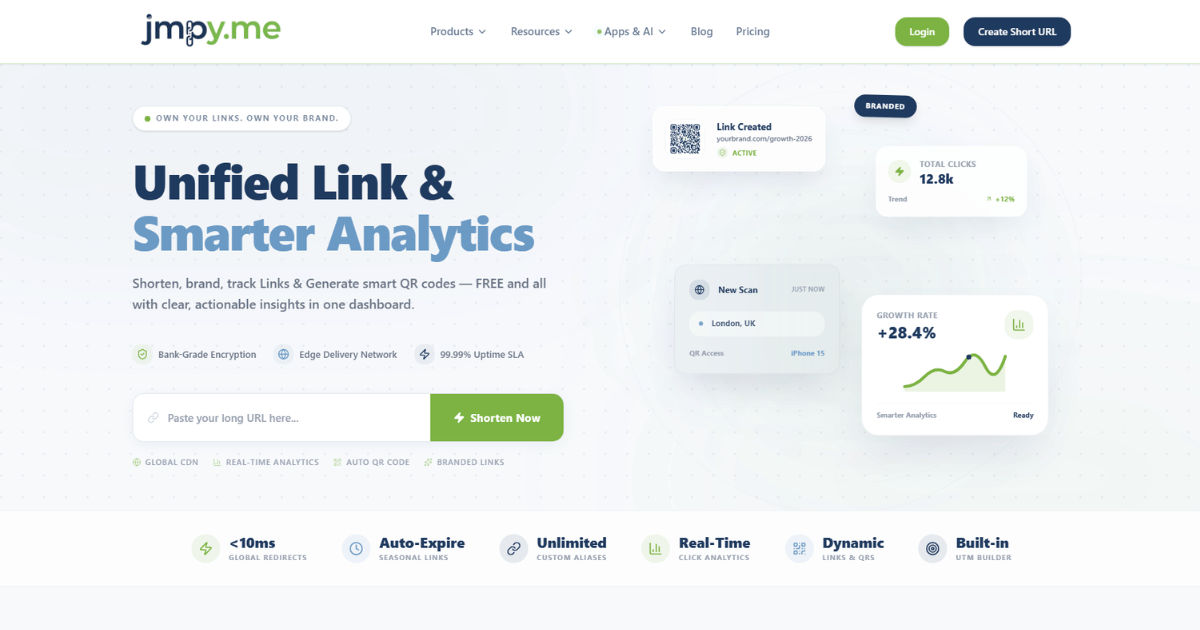
Businesses spend significant time and money creating websites, publishing content, sending emails, running advertisements, and promoting products or services. However, simply publishing something online does not guarantee that people will interact with it. A business needs to understand what users are actually doing after they see its content. Click reporting tools help provide that understanding by recording, organizing, and presenting data about clicks and interactions.
Without reliable click reporting, marketers often have to make decisions based on assumptions. They may believe that a particular advertisement is successful because it received many impressions, or they may think that an email campaign performed well because it reached a large audience. But impressions and reach do not necessarily mean engagement.
Click analytics tools help businesses understand those actions in greater detail. They can show which links receive the most attention, which campaigns generate traffic, which pages encourage users to continue browsing, and where potential customers lose interest.
This information is useful for almost every type of online business. E-commerce stores, service providers, publishers, software companies, educational websites, nonprofit organizations, and local businesses can all benefit from understanding how people interact with their digital content.
In this comprehensive guide, we will explore what click reporting tools are, how they work, why they matter, what information they provide, and how businesses can use their data to make better decisions.
What Are Click Reporting Tools?
Click reporting tools are software systems that collect and analyze information about user clicks and digital interactions.
Depending on the tool, they may track clicks on website links, buttons, advertisements, emails, social media posts, downloadable files, calls to action, and other interactive elements.
The basic purpose is simple: to tell you what people clicked and provide useful context around those actions.
For example, imagine that a company sends an email to 10,000 subscribers. The email contains three important links:
- A link to a product page
- A link to a blog article
- A link to a contact page
A basic email report might show that 500 people clicked something in the email.
A more detailed click reporting system could reveal that 350 people clicked the product page, 100 clicked the blog article, and 50 clicked the contact page.
This additional information is much more useful because it shows which message or offer attracted the most attention.
More advanced systems may provide even deeper information. They might show the device used, location, time of interaction, traffic source, campaign, and other relevant data.
The goal is not simply to count clicks.
The real goal is to understand what those clicks mean.
Why Clicks Are Valuable for Businesses
Clicks represent active engagement.
When someone sees an advertisement, an email, or a website page, they have several choices. They can ignore it, leave the page, scroll past it, or take action.
A click generally indicates that something attracted enough attention for the user to interact.
This does not mean every click leads to a sale or a valuable outcome. Some clicks may be accidental. Others may come from users who are only curious. Some people may click but leave immediately.
Even so, click behavior provides useful evidence about user interest.
Businesses can use this information to identify which content attracts attention and which content fails to motivate users.
For example, suppose an online store has two promotional banners. One receives twice as many clicks as the other. This could suggest that the first design, message, product, or offer is more appealing.
The business can then investigate why the difference exists.
Over time, repeated analysis can help improve marketing campaigns, website design, and customer experiences.
Understanding Click Analytics
Click analytics allows businesses to examine click behavior instead of simply counting total interactions.
A click count answers a basic question:
How many clicks did we receive?
More detailed analysis asks additional questions:
Where did the clicks come from?
Which link received the most clicks?
What device did users use?
When did people click?
Which campaign generated the interaction?
What happened after the click?
These questions are much more valuable for decision-making.
For example, a company might discover that its advertisements generate many clicks but very few purchases. This could indicate a problem with the landing page, pricing, product information, or customer experience.
Without click data, the company may incorrectly assume that the advertisement itself is ineffective.
The data provides a starting point for investigating the complete customer journey.
Measuring Marketing Campaign Performance
One of the biggest reasons businesses use click reporting tools is to measure marketing performance.
Digital marketing campaigns often involve multiple channels. A business may advertise through search engines, social media, email, websites, and other platforms.
Each channel can produce different results.
A campaign may generate thousands of impressions but very few clicks. Another may reach a smaller audience but generate a much higher percentage of interactions.
Click reporting helps marketers compare these results.
For example, if an advertisement receives 20,000 impressions and 800 clicks, the click-through rate is 4%.
If another advertisement receives 10,000 impressions and 700 clicks, its click-through rate is 7%.
Although the second advertisement reached fewer people, it attracted a larger percentage of its audience.
This kind of comparison helps marketers determine which messages and campaigns deserve further investment.
Improving Click-Through Rates
Click-through rate, commonly called CTR, is an important measurement in digital marketing.
It compares the number of clicks with the number of times something was displayed or delivered.
A higher CTR can indicate that an offer, headline, design, or call to action is attractive to the intended audience.
Click reporting tools help businesses identify opportunities to improve CTR.
For example, a business may test two different headlines for an advertisement.
One headline might focus on saving money.
Another might focus on convenience.
If one consistently generates more clicks, the business has evidence that the message is more appealing to that audience.
This type of testing can also be applied to:
- Email subject lines
- Button text
- Landing page designs
- Advertisement images
- Promotional offers
- Website navigation
- Blog calls to action
Small changes can sometimes produce meaningful differences in user behavior.
Identifying the Best-Performing Content
Not every piece of content performs equally.
A website may contain hundreds of pages, but only a small number may generate most of the clicks.
Click reporting tools help identify these high-performing pages.
For example, a company might publish ten blog articles in one month. After reviewing the data, it discovers that two articles receive significantly more clicks than the others.
The company can examine what makes those articles successful.
Perhaps they answer a common question.
Maybe their titles are clearer.
Perhaps they target a topic that people actively search for.
The business can then use these insights to improve its future content strategy.
The same principle applies to product pages, service pages, videos, downloads, and other digital assets.
Understanding User Behavior
Clicks provide a window into how users navigate digital experiences.
Suppose a website has a navigation menu with five main options. If one option receives very few clicks while another receives thousands, that difference may reveal something about user priorities.
Similarly, if users repeatedly click a particular button, that button may represent an important part of their journey.
Click reporting can help businesses identify:
- Popular navigation paths
- Frequently used buttons
- Important product categories
- High-interest topics
- Frequently downloaded resources
- Popular promotional offers
- Underperforming website elements
This information can help businesses create more user-friendly experiences.
Instead of designing a website based entirely on personal opinions, businesses can use real interaction data to guide improvements.
Finding Weak Points in the Customer Journey
A customer journey often involves multiple steps.
A person may first discover a business through an advertisement. They may then visit a website, read a product description, compare options, add an item to a cart, and finally make a purchase.
Problems can occur at any stage.
Click reporting tools can help identify where users stop progressing.
For example, an advertisement may receive many clicks, but the landing page may generate very little further interaction.
This could mean that the advertisement is attracting the wrong audience.
Alternatively, the landing page may be slow, confusing, poorly designed, or unrelated to the advertisement.
Another possibility is that the call to action is not clear.
By examining click behavior at different stages, businesses can investigate these problems instead of guessing.
Improving Website Navigation
Website navigation should make it easy for visitors to find what they need.
However, businesses sometimes create navigation structures based on internal assumptions rather than actual user behavior.
Click reporting can show which navigation links are popular and which are rarely used.
If visitors consistently click one category more than others, the business may decide to make that category easier to access.
If an important page receives very few clicks, the business might improve its placement or add more internal links.
This can make the overall website experience more efficient.
Good navigation is particularly important for large websites with many pages.
Measuring Email Campaign Success
Email marketing is another area where click reporting is extremely valuable.
An email campaign may have a high delivery rate, but delivery alone does not indicate success.
Businesses also need to know whether recipients interact with the message.
Click reporting can reveal which links attract attention and which offers generate action.
For example, an online retailer might send an email featuring several products.
The report could show that one product category receives most of the clicks.
The retailer can then use that information for future campaigns.
Email click data can also help identify engaged subscribers.
People who regularly interact with emails may be more interested in future promotions, product announcements, or educational content.
Evaluating Online Advertising
Advertising can become expensive when campaigns are not monitored carefully.
Businesses need to know whether their advertising budget is generating meaningful engagement.
Click reporting tools help marketers measure advertising performance.
They can compare different advertisements, audiences, platforms, and campaigns.
For example, a company might run the same offer on two platforms.
The first platform may generate a large number of clicks at a relatively low cost.
The second may generate fewer clicks but produce more qualified visitors.
The company can compare the data and determine which platform provides better results.
This is more effective than judging advertising success by impressions alone.
Reducing Marketing Waste
One major advantage of click reporting is the ability to identify inefficient campaigns.
A campaign may consume a significant budget while generating little useful engagement.
Without proper reporting, businesses may continue spending money simply because the campaign is active.
Detailed reporting allows marketers to identify weak performers.
They can pause ineffective advertisements, change targeting, improve messaging, or redirect budget toward better-performing campaigns.
This does not mean that every low-click campaign should immediately be abandoned.
Sometimes a campaign needs time to collect enough data.
The important point is that decisions should be based on evidence rather than assumptions.
Supporting Better Business Decisions
Click reporting tools turn user interactions into measurable information.
This information can support decisions across different departments.
Marketing teams can use it to improve campaigns.
Content teams can identify popular subjects.
Designers can improve layouts.
Sales teams can understand which campaigns generate interest.
Business owners can evaluate whether digital investments are producing results.
When multiple teams use the same reliable data, decisions can become more consistent.
Instead of saying, "I think this campaign is working," a team can examine actual results and discuss what the data shows.
Understanding Traffic Sources
Not every click comes from the same place.
A visitor may arrive through:
- Search engines
- Social media
- Paid advertising
- Referral websites
- Direct visits
- Other digital channels
Click reporting tools can help identify the sources that generate the most engagement.
This is useful because traffic volume alone does not tell the complete story.
One source may produce thousands of visitors who quickly leave.
Another may produce fewer visitors who spend more time exploring the website and eventually become customers.
Understanding traffic quality helps businesses allocate their resources more effectively.
Comparing Devices and User Experiences
People access digital content using different devices.
Some use desktop computers.
Others use smartphones or tablets.
Click reporting can help businesses understand how interaction patterns differ across devices.
Suppose a website receives many mobile visitors but very few mobile clicks on its main call-to-action button.
This could indicate that the button is difficult to see or use on smaller screens.
The business can then investigate the mobile design.
This is particularly important because a website that works well on a desktop computer may not provide the same experience on a smartphone.
Detecting Unusual Click Activity
Click reporting can also help businesses identify suspicious or unusual activity.
A sudden increase in clicks from a specific source may require investigation.
In advertising, unusual click patterns could potentially indicate automated traffic or invalid activity.
While click reporting alone cannot always determine whether activity is fraudulent, it can highlight patterns that deserve attention.
Businesses can then use additional security and advertising tools to investigate further.
This is important because inaccurate data can lead to poor marketing decisions and unnecessary spending.
Helping With Conversion Optimization
A click is often only one step toward a larger goal.
The final objective may be a purchase, registration, form submission, phone call, booking, or another conversion.
Click reporting becomes more useful when combined with conversion data.
For example, imagine that two campaigns generate the same number of clicks.
Campaign A produces 1,000 clicks and 50 sales.
Campaign B produces 1,000 clicks and 150 sales.
The click volume is identical, but Campaign B is clearly producing better business results.
This shows why businesses should not focus on clicks alone.
Clicks help explain engagement, while conversions help explain outcomes.
Together, they provide a more complete picture.
Making Data-Driven Content Decisions
Content marketing often involves creating articles, guides, videos, reports, and other resources.
The challenge is deciding what to create next.
Click reporting can help identify topics that attract the most interest.
If users consistently interact with content about one subject, that topic may deserve additional coverage.
A business could create:
- More detailed guides
- Related articles
- Downloadable resources
- Videos
- Frequently asked questions
- Product recommendations
This approach helps content teams focus on subjects that have demonstrated audience interest.
Improving Calls to Action
Calls to action tell visitors what to do next.
Examples include:
- Learn more
- Request a quote
- Buy now
- Contact us
- Download the guide
- Start a free trial
A call to action can be well-written but still perform poorly if it is difficult to find or does not match the user's needs.
Click reporting tools help businesses determine which calls to action receive attention.
If a particular button consistently attracts clicks, its placement and wording may provide useful lessons for other pages.
If an important button receives very few clicks, the business may need to rethink its design or messaging.
Supporting A/B Testing
A/B testing involves comparing two versions of a digital element to determine which performs better.
For example, a business might test two button labels.
Version A says "Get Started."
Version B says "Request a Free Quote."
If the second version receives more clicks from the same type of audience, the business gains evidence that the wording may be more effective.
Click reporting tools make this type of testing easier to measure.
A/B testing can be used for:
- Headlines
- Images
- Buttons
- Landing pages
- Email designs
- Advertisements
- Product descriptions
The key is to test one meaningful change at a time when possible.
Otherwise, it becomes difficult to determine which change caused the difference.
Why Real-Time Reporting Can Matter
Some click reporting tools provide data almost immediately.
Real-time information can be especially useful during time-sensitive campaigns.
For example, a business may launch a limited-time promotion and monitor user interactions throughout the day.
If the campaign receives fewer clicks than expected, the team may investigate the problem quickly.
Perhaps the advertisement is not reaching the intended audience.
Maybe the offer is unclear.
Perhaps the landing page has a technical issue.
Real-time reporting can help businesses identify problems before a campaign ends.
However, businesses should be careful not to overreact to very small amounts of data. Early results can be misleading.
Good decisions usually require enough data to identify meaningful patterns.
Choosing the Right Click Reporting Tool
Not every business needs the same type of reporting system.
The right choice depends on the organization's goals, budget, technical requirements, and marketing channels.
A small business may need simple website and campaign reporting.
A larger organization may require advanced tracking across multiple platforms.
When choosing a tool, consider whether it can measure the interactions that matter most to your business.
Important considerations include:
- Ease of use
- Reporting flexibility
- Integration options
- Real-time reporting
- Data accuracy
- Conversion tracking
- Privacy controls
- Custom dashboards
- Export options
- Cost
The most advanced tool is not always the best choice.
A simple system that your team understands and uses consistently may be more valuable than a complicated platform that produces data nobody reviews.
Common Mistakes When Using Click Reporting Tools
Click reporting tools are useful, but they can be misused.
One common mistake is focusing only on total clicks.
A high number of clicks may look impressive, but it does not automatically mean a campaign is successful.
Another mistake is ignoring context.
A campaign might receive fewer clicks because it targets a smaller but highly valuable audience.
Businesses should also avoid making decisions based on extremely small data samples.
For example, if one advertisement receives five clicks and another receives seven, that difference may not be meaningful.
Another common mistake is failing to track the entire customer journey.
Clicks are useful, but businesses should also consider what happens after the click.
Finally, companies should avoid collecting data without a clear purpose.
Every metric should ideally help answer a business question.
How to Use Click Reports Effectively
The best approach is to start with clear goals.
Before reviewing reports, ask what you want to learn.
For example:
Do we want more website visitors?
Do we want more product sales?
Do we want more email engagement?
Do we want users to download a resource?
Do we want to improve a specific page?
Once the goal is clear, choose relevant metrics.
Review data regularly rather than only when something goes wrong.
Look for patterns over time.
Compare similar campaigns.
Investigate major changes.
Test improvements.
Then measure the results again.
This creates a continuous improvement cycle.
The Importance of Combining Click Data With Other Metrics
Click reporting is valuable, but it should not exist in isolation.
Businesses can gain deeper insights by combining click information with other measurements.
Useful metrics may include:
- Conversion rate
- Bounce rate
- Engagement time
- Revenue
- Cost per acquisition
- Return on advertising spend
- Customer lifetime value
For example, a campaign with a high click-through rate but a low conversion rate may require a different solution from a campaign with a low click-through rate.
The first campaign may have an issue after the click.
The second may have a problem with its advertisement or message.
Looking at the complete funnel helps businesses understand where improvements are needed.
Privacy and Responsible Data Collection
Businesses should also consider privacy when using tracking and reporting technologies.
Data collection should be handled responsibly.
Organizations should understand applicable privacy requirements and make sure their tracking practices are appropriate for their audience and location.
Businesses should avoid collecting unnecessary information and should protect the data they do collect.
Good reporting is not about gathering every possible piece of information.
It is about collecting useful information responsibly and using it to improve the user experience and business performance.
The Future of Click Reporting
Click reporting continues to evolve as digital experiences become more complex.
Businesses now operate across websites, mobile applications, social media, email, advertising platforms, and other channels.
This creates a growing need for unified reporting.
Future reporting systems are likely to focus more heavily on connecting individual interactions to broader customer journeys.
Artificial intelligence and automation may also make it easier to identify patterns in large datasets.
Instead of manually reviewing thousands of interactions, businesses may be able to receive automated insights about unusual behavior, campaign changes, or emerging trends.
However, technology will not replace the need for human judgment.
Data can show what happened.
People still need to determine why it happened and what should be done next.
Conclusion
Click reporting tools are important because they help businesses understand what users actually do instead of relying entirely on assumptions. A click is a small action, but it can provide valuable information when viewed in the right context. By tracking clicks, businesses can understand which advertisements attract attention, which website elements encourage interaction, which email links perform well, and which content interests their audience.
The real value of Click analytics comes from using this information to make better decisions.Businesses can improve their websites, refine marketing campaigns, create more useful content, strengthen calls to action, and identify problems in the customer journey.
However, clicks should never be treated as the only measure of success.A campaign that receives many clicks but produces no meaningful business results may not be successful. On the other hand, a campaign with fewer clicks may be extremely valuable if those interactions come from the right audience and lead to conversions.